 Waste solutions for office
 Waste solutions for school and education
 Waste solutions for culture and entertainment
 Waste solutions for hotels and restaurants
 Waste solutions for hospitals and clinics
 Waste solutions for airport
 Waste solutions for exhibition and conference center
 Waste solutions for metro and train station
 Waste solutions for park and outdoor area
 Bica Advanced
 Bica Watch N’ Collect
 All the benefits of Bica
Get started with waste sorting
3 tips: Involve, motivate and follow up – that’s how you reach your goal
Get started
Create a plan for implementing waste solutions
In the hallways, the waste systems were mounted with brackets on the wall to avoid…
We already do it at home — we sort our waste. Now workplaces must follow. We need to bring the habit from our private lives into the workplace. This places demands on both employees and employers, as communication, interior layout and organization of the new system are absolutely crucial.
Here you’ll find some good advice on how to handle this new reality at the workplace. Some of the tips are aimed at large companies, while others are more relevant for small and medium‑sized businesses.
From boring duty to pure satisfaction
1. Organization

Appoint waste‑responsible staff
Appoint a person responsible for implementing waste sorting. Also consider appointing ambassadors trained as “waste experts”. Let them be responsible for training the rest of the colleagues.
Make it part of onboarding
Integrate waste sorting into your onboarding process for new employees, in your employee handbook and/or general workplace guidelines.
Assign emptying responsibilities
If you don’t have staff dedicated to the task, it’s a good idea to appoint several employees responsible for emptying the waste bins at specific times during the day or week. This reduces the workload and increases ownership when employees are given responsibility.
Get help from service staff
Your waste collector can advise you on how to implement waste sorting in the best possible way. Establish a good dialogue with them to ensure a constructive collaboration. In a large company, it may be a good idea to let your cleaning and service provider assist with the implementation.
Do you know the 20/20 rule?
Let us explain…
If you need to implement waste sorting in the office, we recommend using this rule:
20 people per waste station
20 meters walking distance to the waste station
In other words: If you have 20 employees gathered in an open office environment, the waste station should be placed no more than 20 meters from their desks. Otherwise, you risk that employees won’t use the system correctly. They must change their behavior from throwing paper into a bin under the desk to getting up and walking a bit to dispose of it. That’s why we use the 20/20 rule as a recommendation for our customers. It helps you succeed with waste sorting.
The most common sorting types in an office environment or small kitchenettes are food waste, plastic, paper and residual waste.
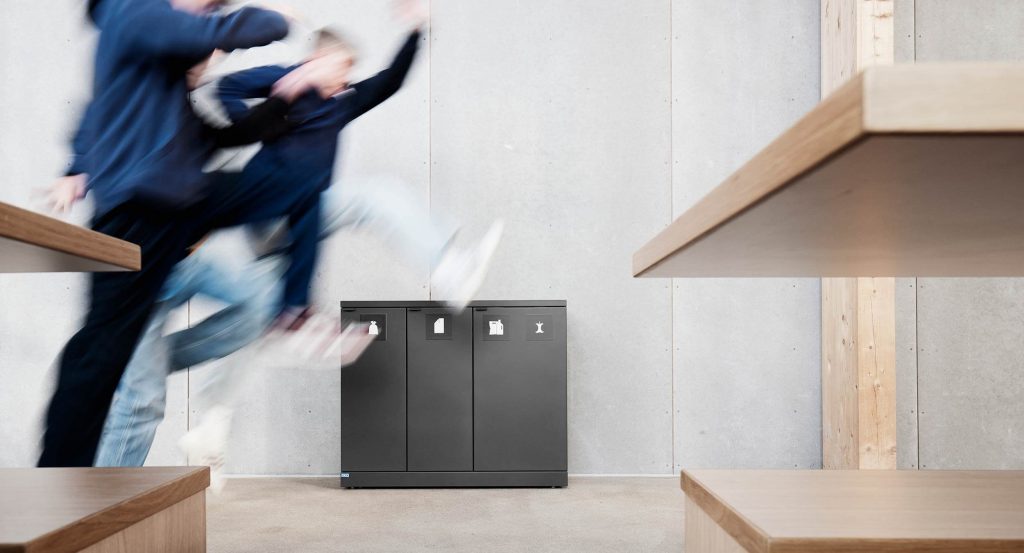
Waste sorting is good practice
2. Interior layout

Determine how many bins you need
Identify which types of waste you generate in each area and install the corresponding number of waste bins.
Involve employees in placement
Involve relevant employees so their part of the workplace is arranged according to their needs. This ensures meaningful placement of waste bins and makes them intuitive to use throughout the workday.
Install clear signage
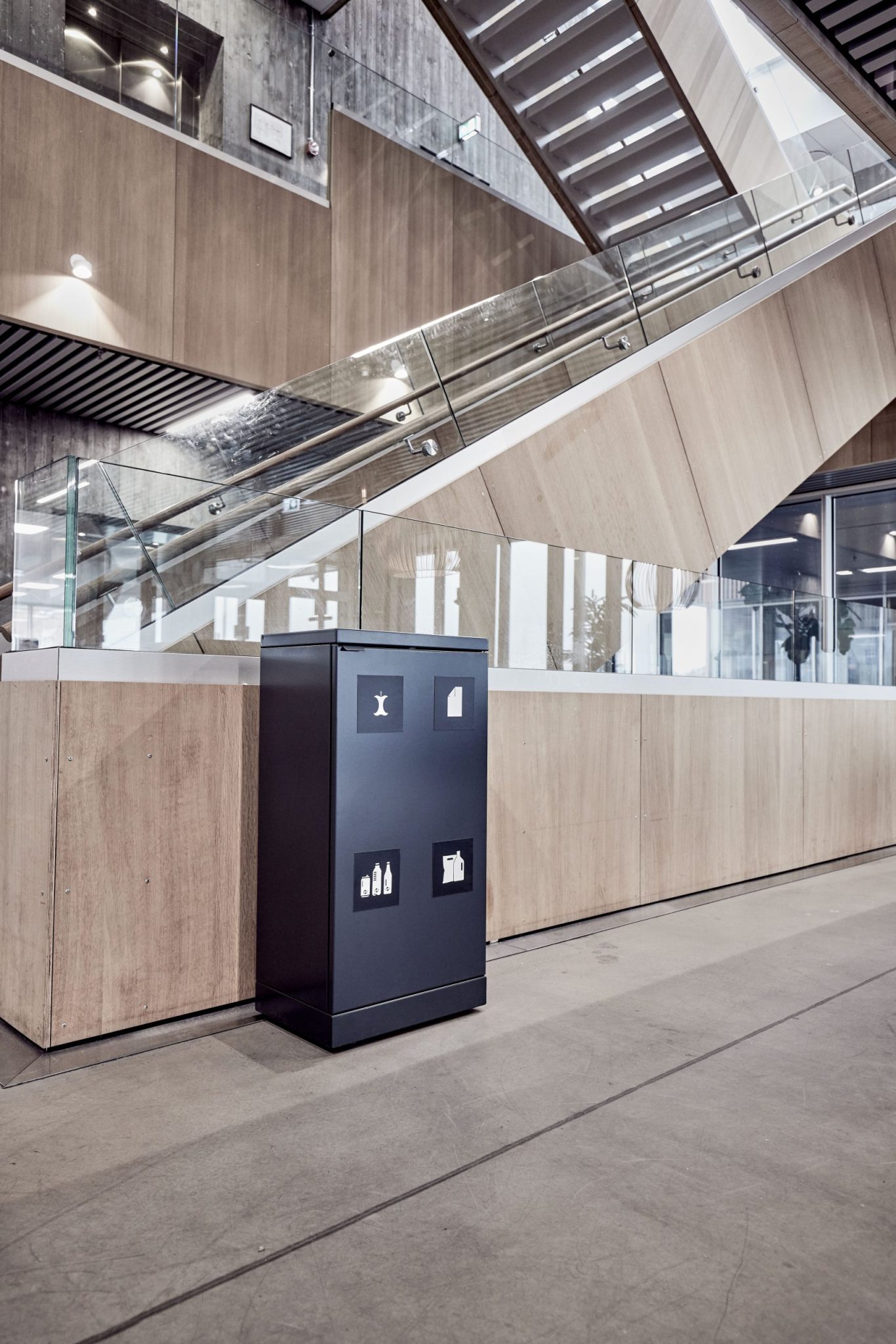
Ensure all waste systems are equipped with pictograms so everyone can easily decode which waste belongs where.
Make purchasing easy for branches
If you are a large company, it may be beneficial to create a list of the different waste bins in various sizes that the company has chosen to use. Branches can then order according to their needs.
Make waste sorting meaningful
3. Communication
Let management deliver the first message
Even if you have appointed a waste‑responsible person, it’s a good idea to let management deliver the first communication about the sorting system. It can strengthen employee motivation.
Don’t let the sorting guide gather dust
Relevant information about your sorting system and waste types should be placed close to your waste stations.
Provide ongoing reminders
It’s important to maintain continuous focus on waste sorting at the workplace. Use internal newsletters and staff meetings to inform about new initiatives or changes. Encourage questions about waste sorting.
Get data on your waste sorting
Your waste collector can likely provide monthly or quarterly data on your waste sorting. This allows you to track, for example, how much you succeed in reducing residual waste. The numbers can be communicated to the workplace and used as a basis for shared goals.
Typical questions and answers
Why should I sort my waste?
There are several reasons. Sorting ensures that smaller amounts of waste end up being incinerated. Waste sorting also helps recycle far more materials and thereby reduces CO2 emissions by reducing the need to produce new materials.
How can we reduce the amount of waste we produce?
There are several ways to reduce waste. For example, we can reuse paper as filling in shipping boxes, buy reusable coffee cups instead of disposable ones, buy more second‑hand items instead of new ones, choose products with less packaging, and compost food waste instead of throwing it in the waste bin.
What can organic waste be converted into?
The organic waste is recycled to extract biogas, which is used for environmentally friendly electricity, heat or fuel.
Want to know more?
Ask our waste sorting specialist